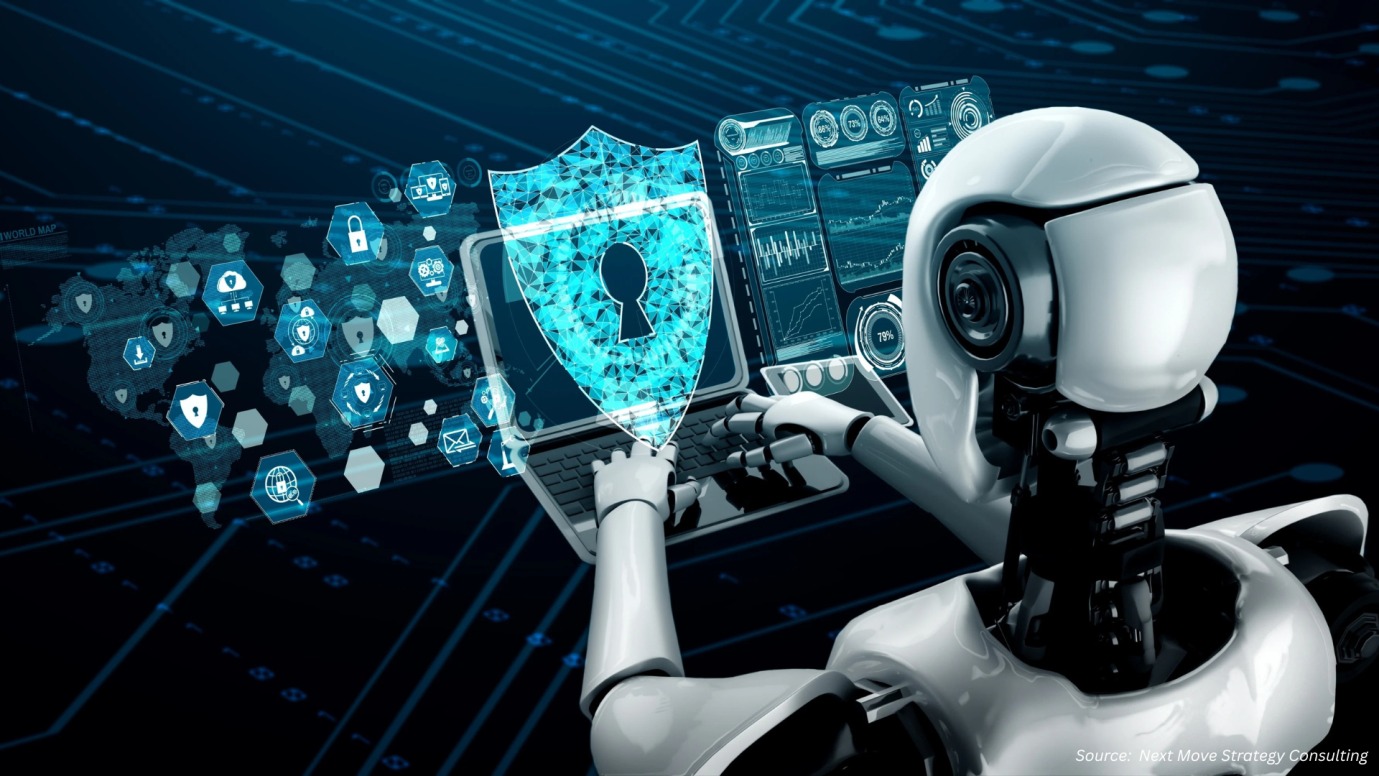
Cybersecurity is evolving at a breakneck pace, and artificial intelligence (AI) is at the heart of this transformation. Imagine a world where cyber threats are not just detected but predicted and neutralized with minimal human effort. That is the promise of AI-based security operations, a game-changer in how organizations protect their digital assets.
According to the report by Next Move Strategy Consulting, the global AI-Based Security Operations Market size is predicted to reach USD 82.45 billion by 2030 with a CAGR of 19.2% from 2025-2030.
In April 2025, IBM unveiled groundbreaking advancements in this space with its Autonomous Threat Operations Machine (ATOM) and Predictive Threat Intelligence (PTI) agent, setting a new standard for autonomous cybersecurity.
The Power of AI in Threat Detection and Response
Cyber threats are growing stealthier, with attackers exploiting vulnerabilities faster than traditional security operations centers (SOCs) can respond. IBM’s ATOM, launched on April 28, 2025, addresses this challenge by introducing an AI-driven framework that automates threat detection, investigation, and remediation. Unlike conventional tools that rely heavily on human analysts, ATOM uses an agentic AI system to orchestrate multiple specialized agents, streamlining processes and reducing response times.
- How ATOM Works: ATOM integrates with existing security analytics platforms, enhancing them with AI-driven capabilities. It analyzes alerts, enriches them with contextual data, conducts risk assessments, and executes remediation plans—all with minimal human intervention.
- Key Benefits: By automating repetitive tasks, ATOM allows security teams to focus on high-priority threats, reducing the time spent on false positives and low-risk alerts.
- Vendor-Agnostic Design: ATOM integrates seamlessly with solutions from IBM, Google Cloud, Microsoft, and other partners, making it a flexible addition to any SOC
ATOM’s ability to automate and orchestrate threat detection and response marks a significant leap forward, enabling organizations to stay ahead of sophisticated cyber threats while optimizing resource allocation.
Predictive Threat Intelligence: Staying Ahead of Attackers
IBM’s Predictive Threat Intelligence (PTI) agent, brings this vision closer to reality. Built on proprietary AI foundation models tailored to specific industries, PTI analyzes data from over 100 sources, including IBM’s X-Force Threat Intelligence, open-source feeds, and organizational context, to deliver proactive threat insights.
- Proactive Insights: PTI focuses on indicators of behavior (IOBs) rather than just indicators of compromise (IOCs), enabling organizations to anticipate threats based on adversary patterns.
- Customized Intelligence: PTI generates tailored threat hunt queries and collective intelligence reports, ensuring relevance to an organization’s unique risk profile.
- Human-AI Collaboration: By combining AI with expert human analysis, PTI delivers actionable intelligence that empowers SOC teams to act swiftly.
PTI’s predictive capabilities shift cybersecurity from reactive to proactive, helping businesses mitigate risks before they escalate.
Impact on the AI-Based Security Operations Market
IBM’s launch of ATOM and PTI is a pivotal moment for the AI-based security operations market. These innovations are accelerating the adoption of agentic AI across industries, particularly in financial services, telecommunications, and healthcare, where IBM serves over 4,000 clients. The market is witnessing a surge in demand for autonomous security solutions as organizations seek to address the shortage of skilled cybersecurity professionals and the increasing complexity of threats. IBM’s vendor-agnostic approach is likely to drive partnerships and integrations, expanding the market for AI-driven SOC tools. This development underscores the growing importance of predictive and automated systems, positioning AI as a cornerstone of cybersecurity strategies in 2025 and beyond.
IBM’s advancements are catalyzing growth in the AI-based security operations market, fostering innovation and collaboration while addressing critical industry challenges.
Why AI-Based Security Operations Matter in 2025
The cybersecurity landscape in 2025 is defined by persistent and evolving threats. Traditional SOCs, burdened by manual processes, struggle to keep pace. AI-based security operations, like those powered by IBM’s ATOM and PTI, offer a solution by automating routine tasks and providing predictive insights. This not only improves efficiency but also enhances the precision of threat detection and response.
| Feature | Traditional SOC | AI-Based SOC (e.g., ATOM & PTI) |
| Threat Detection | Manual, time-intensive | Automated, real-time |
| Response Time | Delayed due to human analysis |
Near-instantaneous with AI orchestration |
| Focus | Reactive, IOC-based | Proactive, IOB-based |
| Integration | Limited to specific vendors |
Vendor-agnostic, integrates with multiple platforms |
| Scalability | Constrained by human resources |
Scales with AI automation |
AI-based security operations are critical for addressing the speed and scale of modern cyber threats, offering a more efficient and proactive approach compared to traditional methods.
Next Steps: Implementing AI-Based Security Operations
Here are actionable steps to get started in 2025:
- Assess Your SOC Needs: Evaluate your current security operations to identify gaps in automation and threat intelligence. Consider how tools like ATOM can enhance existing systems.
- Integrate Vendor-Agnostic Solutions: Choose platforms that work seamlessly with your current tools, as demonstrated by IBM’s partnerships with Google Cloud and Microsoft.
- Leverage Predictive Intelligence: Adopt tools like PTI to shift from reactive to proactive threat management, focusing on behavioral indicators.
- Train Your Team: Ensure your security analysts are equipped to work alongside AI systems, focusing on strategic tasks rather than manual processes.
- Stay Informed: Attend events like the RSAC 2025 Conference to explore the latest AI-driven cybersecurity solutions.
Taking these steps will help organizations harness the power of AI to strengthen their cybersecurity posture and stay ahead of evolving threats.
Conclusion
AI-based security operations are no longer a futuristic concept—they are here, and they are transforming how organizations defend against cyber threats. IBM’s ATOM and PTI, launched in April 2025, exemplify this shift by offering autonomous, predictive, and vendor-agnostic solutions that empower SOCs to operate with unprecedented efficiency and precision. As cyber threats continue to evolve, embracing AI-driven tools will be essential for businesses aiming to protect their digital assets in 2025 and beyond.
About the Author

Sneha Chakraborty is a seasoned SEO Executive and Content Writer with over 4 years of experience in the digital marketing space, bringing a strong command of online visibility strategies and a keen insight into the evolving digital landscape. She specializes in enhancing online visibility and user engagement through data-driven strategies and creative content solutions. Sneha is passionate about translating complex digital concepts into accessible content for a wide audience. Outside of work, she enjoys reading, sketching, and exploring the outdoors through nature photography. The author can be reached at info@nextmsc.com.
About the Author