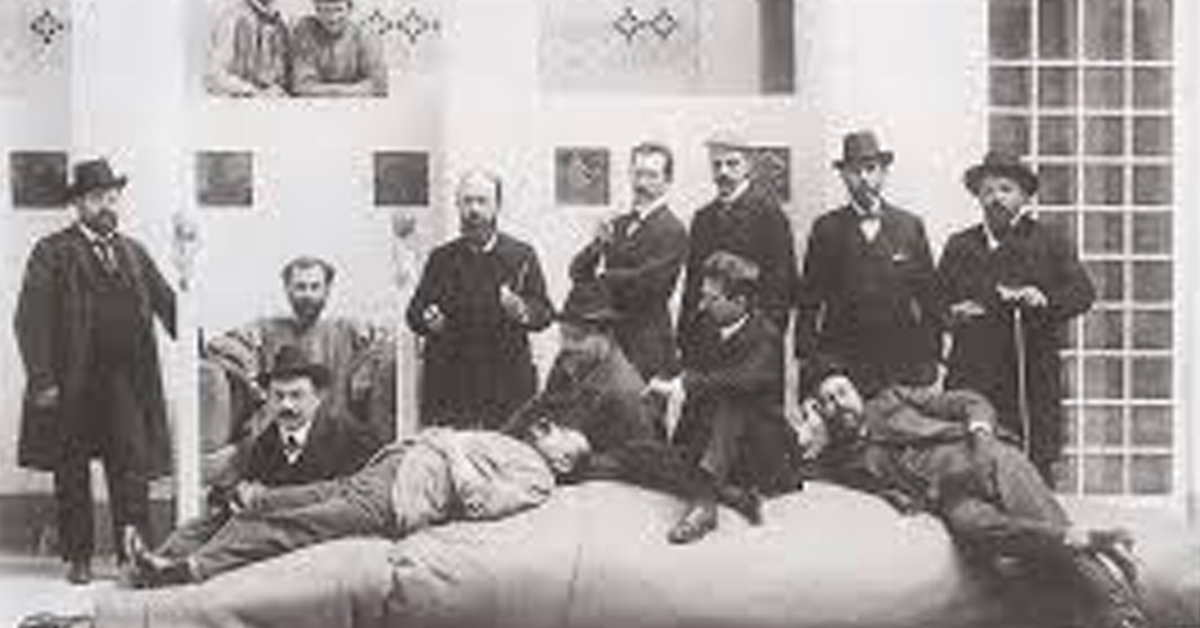
The Vienna Secession, founded in 1897, was a pivotal movement in the history of modern art, championing innovation and rejecting the conservative norms of the Austrian art establishment. At the heart of this revolutionary group was the renowned artist Gustav Klimt. His leadership, vision, and contributions were instrumental in shaping the direction and legacy of the Secession.
The Birth of the Secession
By the late 19th century, Vienna’s art scene was dominated by the Künstlerhaus, a conservative artists’ association with rigid exhibition rules and a preference for academic art. A growing discontent among progressive artists led to a schism, and in April 1897, Gustav Klimt, along with a group of like-minded artists, architects, and designers, founded the Vienna Secession. The group’s manifesto was clear: to promote art outside the constraints of academic tradition and to provide a platform for the avant-garde.
Klimt’s Vision and Leadership
As the first president of the Secession, Gustav Klimt played a crucial role in defining the group’s direction. He was not only a visionary leader but also an emblem of the movement’s principles. Klimt’s presidency was marked by a commitment to artistic freedom, innovation, and the integration of various art forms, including painting, architecture, and decorative arts.
Klimt’s leadership was characterized by his belief in the Gesamtkunstwerk, or “total work of art,” which sought to unify all art forms into a cohesive whole. This philosophy was reflected in the Secession’s exhibitions, where diverse artistic disciplines were displayed together, breaking down the barriers between fine and applied arts.
Major Contributions
Secessionist Exhibitions
One of Klimt’s significant contributions was organizing the Secessionist exhibitions. These exhibitions were revolutionary in their presentation and content, showcasing works that challenged conventional aesthetics and themes. The first Secession exhibition, held in 1898, featured a broad range of art forms, from paintings and sculptures to architectural models and decorative objects.
Klimt’s own works, such as “Pallas Athene” (1898) and “Nuda Veritas” (1899), were central to these exhibitions. These paintings embodied the Secessionist ideals with their bold compositions, symbolic themes, and rejection of naturalistic representation. Klimt’s use of allegory and myth in his art was a radical departure from the realist traditions of the time.
The Secession Building
The Secession building, designed by architect Joseph Maria Olbrich, became the physical and symbolic home of the movement. The building’s motto, “To every age its art, to art its freedom,” encapsulated the Secessionist ethos. Klimt’s involvement in the design and decoration of the building’s interior further demonstrated his commitment to the Gesamtkunstwerk.
One of the building’s most iconic features was the Beethoven Frieze, created by Klimt for the 14th Secession exhibition in 1902. This monumental mural, inspired by Beethoven’s Ninth Symphony, epitomized the synthesis of visual art and music. The frieze’s intricate symbolism and innovative use of materials, such as gold leaf and mother-of-pearl, showcased Klimt’s mastery and his ability to transcend traditional artistic boundaries.
Artistic Innovation
Klimt’s leadership was also evident in his relentless pursuit of artistic innovation. His “Golden Phase,” which began around 1901, was marked by the extensive use of gold leaf and intricate patterns, creating works of unparalleled opulence and symbolic depth. Paintings like “Judith and the Head of Holofernes” (1901) and “The Kiss” (1907-1908) are prime examples of this period. These works not only defined Klimt’s unique style but also influenced the broader trajectory of modern art.
Legacy and Impact
The impact of Gustav Klimt and the Vienna Secession was profound and far-reaching. The movement’s emphasis on artistic freedom and its challenge to traditional hierarchies paved the way for subsequent avant-garde movements, including Expressionism and Art Nouveau. Klimt’s exploration of themes such as eroticism, death, and regeneration resonated with the psychological and cultural currents of his time, influencing artists across Europe.
The Secession also fostered a spirit of collaboration and cross-disciplinary dialogue, bringing together painters, sculptors, architects, and designers. This interdisciplinary approach enriched the artistic landscape of Vienna and contributed to the city’s reputation as a center of cultural innovation at the turn of the century.
Conclusion
In conclusion, Gustav Klimt’s role in the Vienna Secession was instrumental in shaping the movement’s philosophy and legacy. His visionary leadership, commitment to artistic innovation, and contributions to the Secessionist exhibitions and the Secession building helped redefine the boundaries of modern art. Through his work and influence, Klimt left an indelible mark on the art world, inspiring future generations of artists to pursue creative freedom and explore new artistic frontiers.
The Vienna Secession, with Klimt at its helm, remains a testament to the power of art to challenge conventions, inspire change, and reflect the complexities of the human experience. Gustav Klimt’s legacy continues to captivate and inspire, reminding us of the enduring relevance of his contributions to the world of art.
About the Author


